UPS and FedEx reported a day apart this week, and for the first time since FedEx moved its fiscal year to the calendar on June 1, they reported the same three months.
They took different paths through July to September. UPS carried 3.3 percent fewer U.S. packages a day. FedEx carried 2 percent more. Both took in 6 to 7 percent more revenue per package.
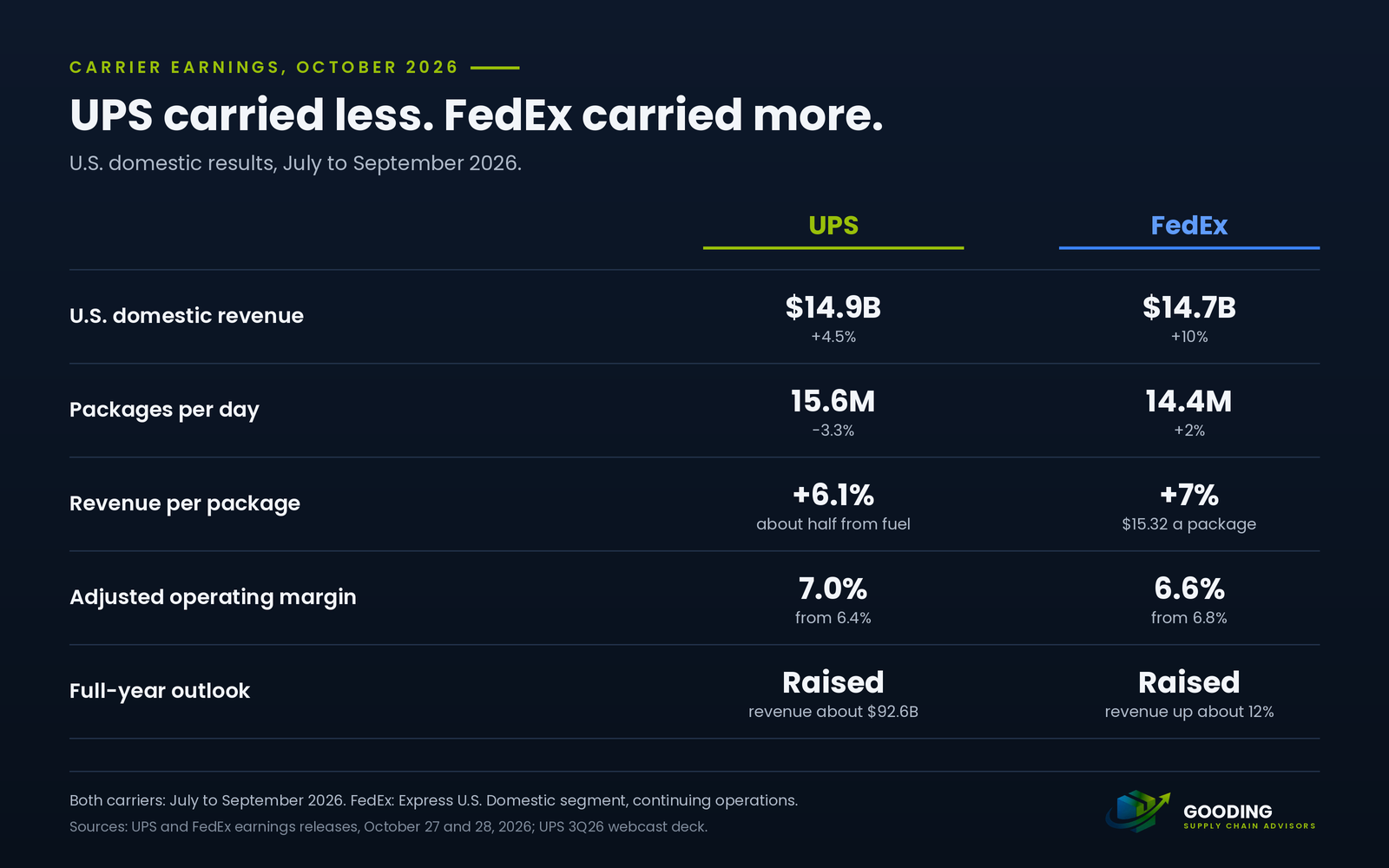
The quarter, side by side
UPS’s U.S. domestic business carried 15.6 million packages a day. Revenue rose 4.5 percent, to $14.9 billion, on a 6.1 percent gain in revenue per package, and adjusted operating margin rose to 7.0 percent from 6.4. This was the first full quarter since UPS finished its planned volume reductions with Amazon in the second quarter.
FedEx’s Express U.S. Domestic segment carried 14.4 million packages a day. Revenue rose 10 percent, to $14.7 billion, and revenue per package rose 7 percent, to $15.32. Adjusted operating margin slipped to 6.6 percent from 6.8, and FedEx said higher fuel prices took 0.3 points off it. Its U.S. fuel expense rose 56 percent from a year earlier.
A year ago, UPS carried about 2.1 million more U.S. packages a day than FedEx, as each reports volume. This quarter the gap was about 1.25 million.
Volume: where each carrier grew
UPS’s growth came from small and mid-size businesses, up 3.7 percent to a record 35.1 percent of its U.S. volume, and from certain large accounts. Ground volume from those customers rose 2.1 percent while their Air volume was flat. UPS attributed the overall decline to “deliberate actions we took earlier in the year to reduce certain volume.”
FedEx grew in priority, up 4 percent, and in business ground, up 3 percent. Home delivery and economy rose 1 percent, and deferred fell 2 percent.
Both carriers grew business deliveries faster than residential ones.
For shippers: if you’re planning a bid, ask each carrier in writing which of your package types it wants more of. This quarter’s numbers say the two answers may differ.
Price: 6 to 7 percent more per package
UPS said about half of its 6.1 percent gain came from base rates and customer mix, and higher fuel rates supplied the rest. FedEx credits base yield expansion, higher fuel surcharges and volume growth for its U.S. revenue gain, with revenue per package up 7 to 10 percent across priority, deferred and ground. For the fourth quarter, FedEx expects U.S. revenue growth in the high single digits, including 3 percentage points from fuel surcharges.
Both carriers set their 2027 increases at 5.9 percent, UPS from December 21 and FedEx from January 4 (UPS’s 2027 increase, FedEx’s 2027 increase). UPS’s new fuel tables take effect November 2 (the update), and USPS adds a weekly fuel surcharge in January (USPS Fuel Goes Weekly in January).
UPS also expects U.S. daily volume to rise about 25 percent from the third quarter to the fourth, and says a little over 100 U.S. customers drive about 80 percent of its peak surge each year.
For shippers: split your own 2026 increase into fuel and everything else before your next pricing conversation. The fuel part moves with diesel and the carrier’s tables; the rest is in your agreement. If your volume surges in the fourth quarter, read your agreement’s peak terms too.
Cost and network
Through September, UPS’s network reconfiguration and Efficiency Reimagined programs delivered about $1.8 billion in benefits, and UPS expects nearly $3 billion from them this year. It has reduced its operational workforce and closed daily operations at some buildings, and it says nearly 70 percent of its packages will flow through automated processes. Carol Tomé called the result “the most automated and efficient network in our history.”
FedEx credited cost savings from its transformation initiatives against higher purchased transportation and wage costs. Raj Subramaniam said FedEx will “remain committed to disciplined operational execution to reduce our cost-to-serve.”
For shippers: if a building that serves you changed its operations this year, check pickup times and transit on your top lanes against last year.
What to do before 2027 pricing takes effect
- Separate fuel from rate. Know how much of your 2026 increase came from each.
- Use the fall window. Reprice before the increases land: December 21 at UPS, January 4 at FedEx (Reprice in the Fall. Move in the Spring.).
- Ask what each carrier wants. Get it in writing, by package type.
- Check service where buildings changed. Pickup times and transit, lane by lane.
The bottom line
Same three months, two paths. UPS grew its margin on fewer packages. FedEx grew its volume and gave up a little margin, which it attributed to higher fuel prices. Both got 6 to 7 percent more per package, and about half of UPS’s gain was fuel.
Takeaway: Know how much of your increase is fuel before you negotiate the rest.
Which carrier has asked you for more volume this year?